Game equipment strategy optimization
Budget-constrained item selection
Modeling League of Legends equipment choices as a budget-constrained decision process, with DQN and sensitivity analysis.
Modeling and implementation
DQN · Reward design · Sensitivity analysis
Research question
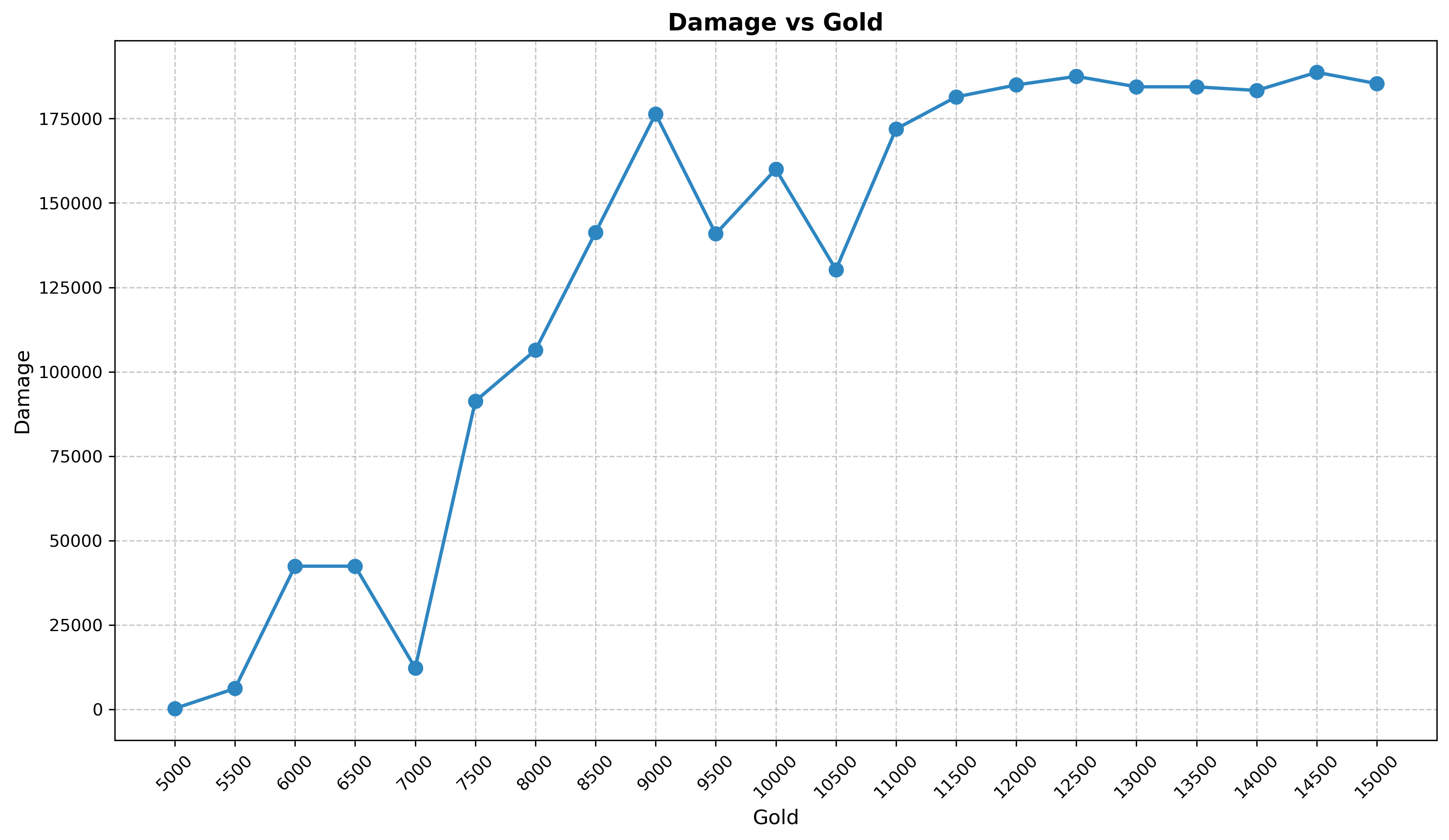
Equipment selection couples a limited gold budget with interactions between item attributes. I modeled purchases as sequential decisions and used a simulated combat objective to study how a DQN policy allocates resources across a six-step selection process.
My contribution
- Built a custom equipment-selection environment with accumulated item attributes, remaining budget, and a six-step purchase horizon.
- Implemented rewards combining intermediate simulated damage, a terminal outcome, and penalties for unaffordable choices; connected the environment to DQN training.
- Organized item processing and sensitivity-analysis code to examine how modeling assumptions affect equipment choices.
Technical approach
- Treat each equipment purchase as a discrete action, updating remaining gold and accumulated combat attributes.
- Score the combination using a simulated opponent model. Combine intermediate damage feedback with a terminal reward and penalties for unaffordable choices.
- Connect the resulting transitions to DQN training and use sensitivity-analysis tooling to study the relationship between input attributes and strategy selection.
Results & outcomes
- Built a resource-constrained learning workflow linking item data, environment transitions, reward shaping, and DQN training.
- Under the simulated opponent setting, the project makes budget allocation and attribute combinations explicit, with sensitivity-analysis tooling to examine how input assumptions influence the selected strategy.
Modeling decisions and analysis
The central question is how to express a one-off combinatorial choice as a sequential learning problem. Selecting one item at a time keeps the action space manageable, while the state must retain the selected combination, remaining budget, and information relevant to later purchases.
I considered terminal-only rewards and intermediate reward shaping. Terminal damage directly reflects the final objective; intermediate feedback makes credit assignment denser, but rewarding purchase speed can encourage cheap items rather than better combinations.
An alternative is to choose the whole set in one action. With N available items and six slots, an ordered action space with repetition grows as N⁶. This motivates the sequential formulation and analysis of whether state aggregation preserves the information needed for decision-making.